

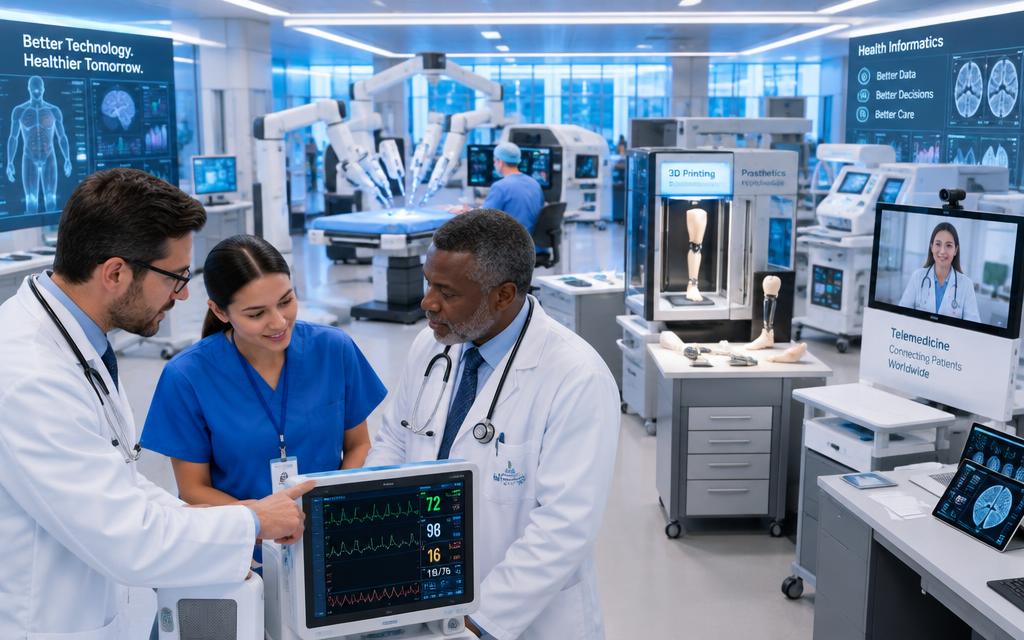
Medical technology includes tools and systems that prevent disease, diagnose conditions, and improve patient care. The phrase what is medical technology definition asks what these tools do in healthcare. It includes devices, equipment, software, and methods, from thermometers to MRI scanners and robotic surgical systems.
The medical technology meaning centers on tools that improve health outcomes and support rehabilitation. Unlike general consumer technology, these tools serve medical needs. Healthcare also includes services and professionals who work together to provide care.
This article explains the definition, history, and categories of medical technology. It covers medical technology examples, clinical uses, benefits, limits, and ethical duties. Explore the uses of medical technology and its effects on patient care.
Key Takeaways
- Medical technology includes a variety of tools and systems used in healthcare.
- It ranges from simple devices to advanced innovations.
- This field is distinct from general consumer technology.
- Understanding its applications is crucial for improving patient outcomes.
- The article will cover definitions, examples, and ethical considerations.
1. What Is Medical Technology Definition and Core Concept
The medical technology definition covers products and systems that improve patient care and healthcare outcomes. It includes tools for diagnosing, treating, and monitoring patients. The definition of medical technology includes diagnostic devices, therapeutic equipment, clinical software, and health information systems.
To understand medical technology today, we need a clear definition. Medtech includes more than machines and gadgets; it supports the full patient-care system. This system covers prevention, diagnosis, treatment, monitoring, rehabilitation, and support.
Defining Medical Technology in Modern Healthcare
The Broad Scope of Medical Technology
Medical technology ranges from simple thermometers to complex robotic surgical devices. Each tool serves a purpose and helps providers deliver effective care. Diagnostic tools find diseases early, while therapeutic devices support treatment.
How Medical Technology Differs from General Technology
Medical technology differs from general technology because it focuses on clinical care. It prioritizes patient safety, ease of use, and regulatory compliance. Each device or system undergoes rigorous testing and validation before healthcare use.
Core Disciplines Behind Medical Technology
Biomedical Engineering and Clinical Sciences
Biomedical engineering helps develop medical technology. It combines engineering and biological science to create devices that improve patient care. Clinical technology uses clinical sciences to meet providers’ and patients’ needs.
Information Technology and Data Analytics
Information technology is another key part of medical technology. It manages and analyzes large amounts of health data, helping clinicians make informed decisions. Data analytics reveals insights that guide treatment plans and improve patient outcomes.
Related Posts:






In summary, the definition of medical technology includes many tools and systems essential to modern healthcare. Healthcare technology supports patient care and clinical practice. Understanding its core concepts and fields shows its significant impact.
2. The Evolution and History of Medical Technology
The history of medical technology shows how healthcare has changed over time. From simple tools to advanced systems, medical technology has improved patient care and diagnosis.
Early Milestones in Medical Innovation
Early medical tools were simple, but they shaped modern care. One major medical innovation was the stethoscope, invented by René Laennec in 1816. This device let physicians hear internal body sounds and improve diagnosis without invasive procedures.
From the Stethoscope to the X-Ray Machine
Another major medical innovation was the discovery of X-rays by Wilhelm Conrad Röntgen in 1895. This breakthrough let doctors view the body’s internal structures and changed diagnostic practices. Later, electrocardiographs and pacemakers advanced medical devices for heart monitoring and treatment.
The Development of Electronic Medical Devices
In the late 20th century, electronic medical devices grew quickly, including ultrasound machines and laboratory analyzers. They made diagnoses more accurate and efficient. Computerized systems then began to change healthcare.
The Digital Transformation of Healthcare
The rise of digital healthcare changed medical practice. Electronic health records (EHRs) became a foundation of modern healthcare. They improved data management, provider communication, patient safety, and care quality.
Electronic Health Records and Connected Systems
With EHRs, healthcare providers can quickly access patient information and make better decisions. Connected systems allow smooth data exchange and make healthcare delivery more efficient.
The Rise of Artificial Intelligence in Medicine
Recently, artificial intelligence in medicine has gained ground through machine learning and predictive analytics. AI tools support clinical decisions and image interpretation. They improve diagnostic accuracy and patient outcomes.
| Milestone | Year | Impact |
|---|---|---|
| Stethoscope | 1816 | Enhanced non-invasive diagnosis |
| X-Ray | 1895 | Revolutionized internal imaging |
| Electrocardiograph | 1903 | Improved heart monitoring |
| Electronic Health Records | 1960s | Streamlined patient data management |
| AI in Medicine | 2010s | Enhanced diagnostic accuracy |
In conclusion, the history of medical technology shows a continuing search for better solutions. Each milestone improved patient care and showed technology’s deep effect on healthcare.
3. Core Categories and Types of Medical Technology
The types of medical technology cover several key areas. These categories of medical technology improve patient care and healthcare outcomes. Learning their roles shows how technology supports the healthcare system.
3.1 Diagnostic Medical Technology
Diagnostic technology helps identify diseases and health conditions. It uses tools and systems that provide important information about a patient’s health. Examples include:
- X-ray systems
- MRI scanners
- CT scanners
- Ultrasound equipment
- Pathology analyzers
- Genetic tests
- Point-of-care testing devices
3.1.1 Imaging Systems and Laboratory Equipment
Imaging systems, such as MRI and CT scanners, show internal structures. Laboratory equipment, including pathology analyzers, supports tests that help diagnose conditions.
3.2 Therapeutic Medical Technology
Therapeutic medical devices help treat diseases and manage health conditions. This category includes:
- Surgical instruments
- Radiation therapy systems
- Infusion pumps
- Dialysis machines
- Cardiac devices
3.2.1 Surgical Instruments and Treatment Devices
Surgical instruments support operations. Treatment devices, such as infusion pumps, deliver medicines and fluids to patients.
3.3 Health Information Technology
Health information technology uses digital tools to manage health data. These tools include:
- Electronic health records (EHRs)
- Clinical decision-support tools
- Patient portals
- Practice-management systems
3.3.1 Electronic Health Records and Clinical Software
EHRs organize patient information and improve communication among healthcare providers. Clinical software supports decisions and helps improve care quality.
3.4 Assistive and Rehabilitative Technology
Assistive technology and rehabilitative technology help people with disabilities or injuries. Key examples include:
- Wheelchairs
- Hearing aids
- Prosthetic limbs
- Orthotic devices
- Therapy robots
3.4.1 Mobility Aids and Prosthetic Devices
Mobility aids, such as wheelchairs, help users live more independently. Prosthetic devices support people who have lost limbs and help restore function.
These categories often overlap. For example, an implant can provide treatment while collecting monitoring data. This integration supports safer, coordinated, and personalized patient care.
| Category | Examples | Purpose |
|---|---|---|
| Diagnostic Technology | X-ray, MRI, Genetic Tests | Identify health conditions |
| Therapeutic Devices | Surgical Instruments, Infusion Pumps | Treat and manage diseases |
| Health Information Technology | EHRs, Clinical Software | Manage health data |
| Assistive Technology | Wheelchairs, Prosthetics | Support individuals with disabilities |
4. Key Examples of Medical Technology in Modern Healthcare
Modern healthcare relies on medical technology examples that improve patient care and experiences. This section reviews tools shaping care today.
Imaging and Diagnostic Devices
Imaging devices help doctors find medical conditions. They show detailed body views, helping healthcare professionals make informed decisions. The three main types include:
MRI Machines, CT Scanners, and Ultrasound Systems
MRI machines use magnets and radio waves for detailed soft-tissue images; CT scanners combine X-rays from different angles. A CT scanner shows bones and soft tissues in trauma cases. ultrasound systems use sound waves to view organs and fetal development during pregnancy; each technology has different strengths and limits.
Wearable Health Technology
The Apple Watch uses Apple Watch health technology to track health in real time. Continuous glucose monitors, such as the Dexcom G7, also collect vital data.
Apple Watch and Continuous Glucose Monitors Like Dexcom G7
The Apple Watch tracks heart rate and activity levels and can alert users to irregularities. Similarly, the Dexcom G7 continuously monitors glucose for people with diabetes, supporting timely action. These devices encourage patient involvement but do not replace professional diagnoses.
Robotic Surgery Systems
Robotic surgery systems advance surgical procedures. They improve precision and can shorten patient recovery times.
The da Vinci Surgical System by Intuitive Surgical
The da Vinci Surgical System helps surgeons perform minimally invasive operations with greater control and accuracy. Its robotic arms perform delicate movements while providing magnified views of the surgical site. The robot does not work independently; the surgeon controls it throughout the procedure.
Telemedicine and Remote Monitoring Platforms
Telemedicine technology has become more important, especially in recent years. It gives patients convenient access to healthcare services.
Telehealth Apps and Remote Patient Monitoring Tools
Telehealth apps support video consultations. Remote patient monitoring tools include connected blood pressure cuffs and pulse oximeters. These tools support ongoing care without in-person visits, but data accuracy and patient privacy remain challenges.
5. How Medical Technology Is Used in Patient Care
Medical technology uses help improve patient outcomes. Across healthcare settings, technology supports diagnosis, treatment choices, and patient safety. This section explains key uses of technology in patient care.
Improving Diagnosis and Treatment Decisions
Medical technology improves clinical decisions. Electronic health records (EHRs) and clinical decision support systems (CDSS) give professionals complete patient data. This data helps clinicians identify conditions and compare treatment options.
Diagnostic imaging, including MRI and CT scans, shows internal structures in detail. These tools support faster, more accurate diagnoses and timely treatment.
Enhancing Patient Monitoring and Safety
Patient monitoring technology supports safety and timely care. Bedside monitors and wearable sensors track vital signs continuously. Alerts notify providers about changes, so they can act quickly.
Medication alerts and fall detection systems provide added protection. Automated documentation and identity verification reduce treatment errors.
Supporting Personalized and Preventive Care
Personalized medicine uses medical technology to tailor care. Genomic data and biometric information support treatment plans for each patient’s needs. Predictive analytics can find patients at risk for specific conditions and support early action.
Preventive healthcare technology also supports long-term health. Screening reminders, vaccination outreach, and chronic disease management programs help patients maintain health. They also help reduce hospital visits.
| Application | Technology Used | Benefits |
|---|---|---|
| Diagnosis | Imaging Systems | Improved accuracy and speed |
| Monitoring | Wearable Sensors | Continuous health tracking |
| Personalized Care | Genomic Testing | Tailored treatment plans |
| Prevention | Health Apps | Proactive health management |
6. The Role of Medical Technology in Diagnostics and Imaging
Medical imaging technology helps healthcare professionals detect and monitor disease accurately. Recent advances have improved patient care by making diagnosis more precise and efficient.
Advanced Imaging Modalities
Key advances include advanced imaging modalities, including MRI CT PET scans. Each technology offers different benefits.
- MRI (Magnetic Resonance Imaging) uses strong magnetic fields and radio waves to produce detailed images of soft tissues without exposing patients to ionizing radiation.
- CT (Computed Tomography) combines X-ray images taken from different angles to create cross-sectional views of the body, allowing for rapid diagnosis of conditions.
- PET (Positron Emission Tomography) involves injecting a radiotracer to visualize metabolic activity, often used in conjunction with CT or MRI for comprehensive insights.
Each modality has specific indications and contraindications. Clinicians must understand preparation needs and image interpretation for effective patient management.
MRI, CT, and PET Scan Technologies
MRI is valuable for examining brain and spinal cord conditions. CT scans are often preferred in emergencies because they work quickly. PET scans help detect cancer and monitor treatment response.
Laboratory and Point-of-Care Diagnostics
Laboratory diagnostics have changed greatly. Automated blood analyzers and rapid test kits are now common in emergency departments and clinics. These tools support fast decisions and careful quality control.
- Quick decision-making: Rapid tests can provide results in minutes, crucial for timely treatment.
- Quality control: Despite the speed, these tests require rigorous quality assurance to ensure accuracy.
Point-of-care testing provides immediate results, shortening clinicians’ decision times and improving patient outcomes.
Blood Analyzers and Rapid Test Kits
Examples include blood glucose meters and rapid strep tests. Both are important in primary care and emergency settings.
AI-Powered Diagnostic Tools
Artificial intelligence (AI) has changed diagnostics. AI diagnostic tools use machine learning in radiology to help with image triage, pattern recognition, segmentation, and measurement.
- Image triage: Prioritizing cases based on urgency.
- Pattern recognition: Identifying anomalies in imaging data.
- Segmentation and measurement: Enhancing the accuracy of diagnoses.
These tools support clinical decisions, but they need validation and oversight. This reduces risks such as false positives and algorithmic bias.
Machine Learning Applications in Radiology
Dr. John Smith, a leading radiologist, states, “AI is not here to replace radiologists but to augment their capabilities, making the diagnostic process more efficient.” His view shows why human oversight remains important in the age of AI.
7. Medical Technology in Surgery, Treatment, and Rehabilitation
Surgical medical technology improves surgery, treatment options, and rehabilitation. These advances improve patient outcomes and streamline healthcare work. This section covers technologies changing surgery, drug delivery, and rehabilitation.
Minimally Invasive and Robotic Surgery
Minimally invasive surgery has changed how doctors perform operations. Laparoscopic and endoscopic methods use small incisions or natural openings. They cause less tissue damage, reduce pain, and support faster recovery.
Laparoscopic and Endoscopic Surgical Systems
Laparoscopic systems use cameras and special tools during surgery through small incisions. Endoscopic systems treat internal organs without large openings. Both improve doctors’ views and precision, making them useful for many procedures.
Drug Delivery and Treatment Devices
Drug delivery systems help manage many health conditions. Infusion pumps deliver medicines or fluids at controlled rates. They help hospitals provide accurate doses consistently.
Infusion Pumps and Implantable Cardiac Devices
Implantable cardiac devices include pacemakers and implantable cardioverter-defibrillators. They manage heart rhythm disorders by monitoring heart activity and sending electrical impulses when needed. These devices improve quality of life and reduce hospital visits.
Rehabilitation and Assistive Technologies
Rehabilitation technology is advancing quickly and offering new recovery options. Physical therapy equipment and robotic exoskeletons support the rehabilitation process. They also help patients regain independence.
Physical Therapy Equipment and Robotic Exoskeletons
Physical therapy equipment, such as resistance bands and balance boards, supports recovery. Robotic exoskeletons help people with mobility challenges walk and complete daily activities. These tools fit individual needs and support effective rehabilitation plans.
Advanced medical technology is reshaping surgery, treatment, and rehabilitation. Robotic surgery technology and other tools promise better patient care and outcomes. For more information, read this comprehensive article.
8. Benefits, Challenges, and Ethical Considerations of Medical Technology
Medical technology has a deep impact on healthcare, bringing important benefits and serious challenges. This section examines the benefits of medical technology, the challenges of medical technology, and ethical concerns.
Major Benefits for Patients and Providers
Medical technology has transformed healthcare, leading to improved clinical outcomes and greater operational efficiency. Advanced diagnostic tools help providers make earlier, more accurate diagnoses, which supports effective treatment. Telemedicine has expanded healthcare access, helping remote patients receive quality care without long trips.
Improved Clinical Outcomes and Operational Efficiency
Medical technology streamlines workflows, reduces manual errors, and improves patient care. For example, robotic surgery systems improve precision, causing fewer complications and shorter recovery times. Electronic health records also improve care coordination by making patient information available when needed.
Key Challenges and Limitations
Despite its benefits, medical technology faces several challenges. High purchase and maintenance costs may burden healthcare facilities, especially in underserved communities. Also, unreliable internet and electricity can limit technology use in some areas.
Cost Barriers, Access Issues, and Training Requirements
Access to advanced medical technologies remains unequal across communities. Some regions lack the infrastructure needed to support new tools, creating differences in healthcare quality. Healthcare professionals also need proper training, which can create a major hurdle.
Ethical and Regulatory Considerations
As medical technology advances, ethical questions about its use grow more important. Concerns about patient data privacy and healthcare cybersecurity guide many discussions. Unauthorized access to sensitive patient information creates serious risks, so providers must secure their systems.
Data Privacy, Cybersecurity, and FDA Oversight
The U.S. Food and Drug Administration (FDA) provides FDA medical device oversight through medical device regulation. It ensures medical devices meet safety and efficacy standards. Regulatory pathways vary by device type and risk, while healthcare organizations must prioritize safety, usability, and equitable access.
9. Conclusion
Medical technology is a vital part of modern healthcare. It includes devices, software, and systems that improve patient care, from diagnostic tools to robotic surgery systems. The importance of medical technology appears in better access, early disease detection, and personalized treatment.
The medical technology impact is profound, as new ideas continue to change healthcare. These advances improve patient outcomes and make healthcare systems more efficient. Yet cost, privacy, and cybersecurity challenges must be addressed for fair access.
The future of medical technology holds exciting possibilities. Artificial intelligence, connected devices, and remote monitoring may transform patient care. Responsible healthcare innovation is essential; for more insights, visit this resource.