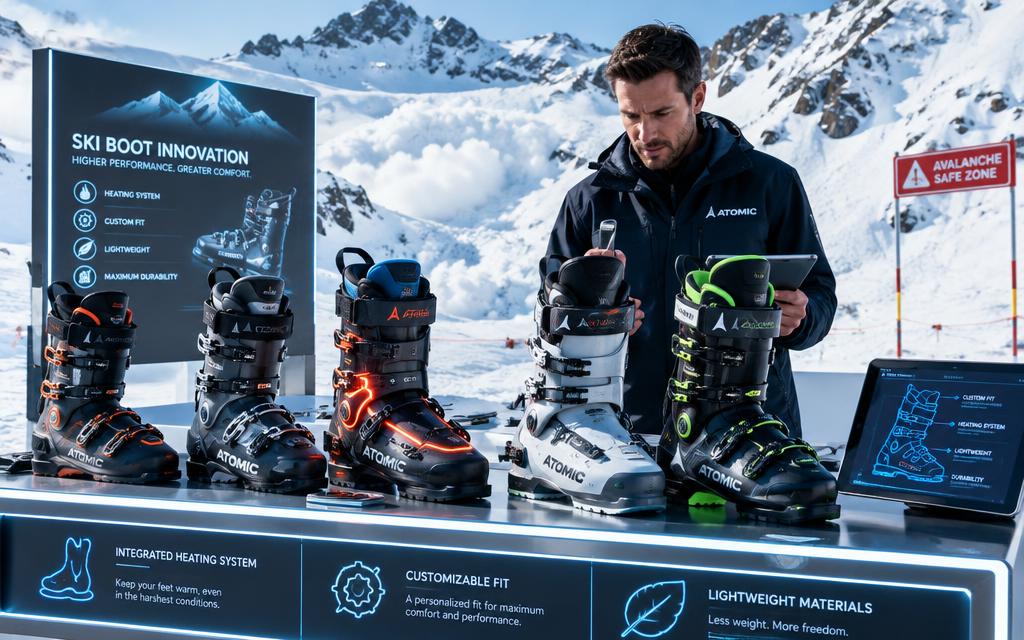
Has ski boot technology changed over the years? Yes, it has. The main goal remains efficient movement transfer and skier protection. Plastic shells replaced traditional leather, while ski boot innovations improved performance and comfort.
Today’s modern ski boots include features such as thermoformable liners, walk modes, and lightweight materials. These features improve fit and support different skiing styles. A resort-focused alpine boot differs greatly from a freeride or touring boot, with each balancing downhill power, uphill mobility, warmth, weight, and durability.
This article explains how each innovation works, who benefits, and which limits or compatibility issues matter before purchase. Advanced features can improve fit and performance. Still, proper sizing, professional boot fitting, and correct binding compatibility remain essential for an optimal skiing experience.
Modern ski boots have evolved with innovative materials and designs.
Different boots cater to specific skiing styles and needs.
Advanced features improve comfort and performance.
Professional fitting is crucial for optimal performance.
Compatibility with bindings is essential for safety and efficiency.
1. The Evolution of Ski Boot Technology Over the Decades
Studying ski boot history shows how innovation and need shaped each change. Moving from leather to plastic in the mid-20th century changed ski boot technology. Early leather ski boots worked more like tough winter footwear than precise sports equipment.
These boots offered flexibility and some comfort, but absorbed moisture and gave uneven support.
As skiers wanted better performance, manufacturers tested new materials. The introduction of plastic ski boot shells created a firm, repeatable link among the skier’s foot, boot, and binding. This change improved durability, weather resistance, and torsional support, giving skiers better downhill control.
Yet early plastic designs were often heavier and less comfortable than leather boots.
From Leather to Plastic: The Mid-20th Century Shift
The mid-20th century brought plastic ski boots to the market and changed skiing. These boots gave skiers a more precise fit and greater control on slopes.
“The transition to plastic was not just about material; it was about redefining the skier’s experience.”
The 1990s and 2000s: Standardization and Performance Tuning
During the 1990s and 2000s, ski boot technology kept advancing. This era emphasized standardization and performance tuning. Manufacturers offered varied boot shapes, flex ratings, and adjustable buckles for different abilities and foot shapes.
This approach created more personal fits and improved overall performance.
Flex numbers are not universal across brands. Modern alpine ski boot evolution builds on decades of work in shell molding, liner construction, cuff design, and binding interfaces. Together, these advances help modern ski boots provide skiers with the best possible experience.
Feature
Leather Ski Boots
Plastic Ski Boots
Material
Leather
Plastic
Flexibility
High
Moderate
Durability
Moderate
High
Weather Resistance
Low
High
2. Has Ski Boot Technology Changed? Setting the Stage
Has ski boot technology changed? Yes, new features improve ski boot safety and skier performance. As skiing demands evolve, so does modern ski boot design. Recreational and expert skiers expect boots that fit well and improve their slope experience.
Understanding why innovation matters helps skiers choose better equipment. Advances in ski boot comfort and performance address common issues like pressure points and cold feet. A well-fitted boot improves control, while lightweight materials and better range of motion are critical for touring and freeride skiers.
Several forces drive these recent advancements, including increased skiing participation and demand for customized fit options. Innovations in composite and polymer manufacturing create lighter boots without sacrificing performance. Consumer expectations for easier adjustability and compatibility between boots and bindings are reshaping the market.
These technologies involve trade-offs, so balancing factors helps skiers choose innovations that match their individual priorities. A lighter boot may reduce damping, while a highly rigid shell may need precise fitting. Electronic components also raise questions about durability and charging.
3. Custom Moldable Liners and Thermoforming Breakthroughs
In recent years, custom ski boot liners have changed ski boot fit. They adapt to the skier’s foot, improving comfort and performance over traditional stock liners. Thermoforming creates this tailored fit.
How Thermoforming Works
Thermoforming heats the liner according to the manufacturer’s specifications. The skier places their foot inside, letting the liner cool around the heel, ankle, instep, and forefoot. Footbeds, toe caps, or foam pads can refine the fit.
Thermoforming cannot replace proper boot sizing. Heating an incorrectly sized liner cannot fix shell length or width problems.
Benefits of Custom Moldable Liners
Heat-moldable ski boots with custom liners offer several advantages:
Improved heel retention: A snug fit helps keep the heel in place, reducing movement within the boot.
Fewer pressure points: A well-fitted liner minimizes discomfort during long ski sessions.
Consistent warmth: The close fit helps retain heat, keeping feet warm in cold conditions.
Better energy transfer: Enhanced fit allows for more efficient power transfer from skier to ski.
A close-fitting liner often needs less buckle pressure, which may improve circulation and comfort.
Notable Models Featuring Advanced Liners
Several ski boot models are known for advanced fit systems and customizable liners:
Model
Brand
Key Features
Hawx Ultra
Atomic
Lightweight, excellent heel hold
S/Pro
Salomon
Custom shell technology, great warmth
Mach1
Tecnica
High performance, adjustable fit
Work with an experienced boot fitter during molding, especially with unusual foot features or past injuries. Proper alignment, shell modifications, and footbed choice can greatly improve your skiing experience.
For more information on innovations in ski boot technology, explore this patent.
4. Walk Mode and Hike-Ski Mechanisms
Ski boot walk mode has changed how skiers handle uphill and downhill terrain. This feature meets the growing need for versatile skiing, especially during touring and freeride activities. It lets skiers use a flexible cuff for climbing, then lock it for strong downhill control.
As touring and freeride skiing grow, skiers need boots that move smoothly between walking and skiing. Many now choose hike-and-ski boots for comfortable travel across varied terrain, driving new boot technology.
The Rise of Touring and Freeride Skiing
Touring and freeride skiing have grown because skiers can explore off-piste areas and reach untouched powder. These activities need boots that perform downhill and stay flexible and comfortable uphill. Modern touring ski boots and freeride ski boots with walk mode help skiers cross difficult terrain without losing performance.
How Walk Mode Mechanisms Function
Walk mode usually uses a rear lever, cable, or built-in lock to release the boot cuff. This expands motion and supports a more natural walking gait. In ski mode, the mechanism locks the cuff for support and transfers power efficiently to the skis.
Popular Walk Mode Implementations
Salomon MTN Explore: Known for its lightweight design and excellent uphill performance.
Atomic Backland: Offers a great balance between climbing efficiency and downhill stability.
Tecnica Zero G: Features a robust construction ideal for aggressive skiing.
Scarpa Maestrale: A favorite among backcountry enthusiasts for its comfort and performance.
Each model shows a different ski boot design and generation. Touring boots may have tech inserts and ISO-standardized soles, but binding compatibility can vary greatly. Check compatibility, release settings, and the maker’s intended use before buying, because one boot may not fit every binding.
Walk mode opens new terrain, but boot choice still depends on terrain, climbing distance, and downhill goals. For more detail about ski boot walk mode, read this comprehensive guide.
5. Carbon Fiber and Lightweight Shell Construction
The ski boot industry has changed with carbon fiber ski boots and lightweight ski boot construction. These advances improve performance and reduce weight for recreational and professional skiers. Designing lightweight alpine boots has inspired new materials and designs that improve agility and comfort.
Manufacturers now use carbon-reinforced plastics and composite materials more often. These materials support thinner shell walls and improved plastic blends, creating a better weight-to-strength ratio. Skiers get lighter boots without losing needed support and stability.
The Shift Toward Lighter Materials
Reducing ski boot weight matters for several reasons. Each saved gram can help during long traverses, repeated lift rides, or touring approaches. Weight reduction must balance vibration damping, warmth, durability, and downhill stability.
Modern ski boots use thin-wall molding and targeted stiffness design to preserve performance.
Performance Benefits of Carbon Fiber Shells
Carbon fiber offers quicker response, improved edging, and less fatigue during climbs. A more direct connection to the ski helps skiers feel more in tune with their equipment. Carbon fiber does not improve every boot for every skier; it mainly adds stiffness and structural efficiency while keeping weight low.
Leading Carbon Fiber Ski Boot Models
Leading models include the Head Nexo LYT, Fischer RC One, and Nordica Speedmachine. Each model uses different amounts and types of carbon reinforcement for different skiing styles and preferences. Buyers should check the exact model year’s specifications because construction can change each season.
Although ski boot weight reduction can improve performance, it brings trade-offs. These may include a higher price, a more demanding fit, and less forgiving flex. Lighter boots may also dampen less than heavier ones, so skiers should match boots to their needs and style.
6. BOA Fit Systems and Micro-Adjustable Closures
The BOA Fit System is changing how skiers experience comfort and performance. This micro-adjustable ski boot closure uses a dial to tighten a strong lace or cable around the boot shell. It creates a custom fit that improves comfort and control on the slopes.
How BOA Technology Works
The BOA system uses a simple dial that tightens or loosens the lace. Skiers can make quick micro-adjustments on the go across the lower shell or specific fit zones. Unlike traditional buckles, it spreads pressure evenly, removes hotspots, and adapts to the skier’s movements.
Advantages Over Traditional Buckles
This ski boot fit system offers several benefits over ski boot buckle alternatives:
Even Pressure Distribution: The BOA system minimizes hotspots by spreading tension evenly.
Quick Adjustments: Skiers can easily tighten or loosen their boots without removing gloves, making it ideal for changing conditions.
Reduced Bulk: The streamlined design of BOA closures allows for a lighter boot overall.
Fine-Tuning Fit: As liners compress over time, the BOA system allows for easy adjustments to maintain a secure fit.
Ski Boots Featuring BOA Systems
Several BOA ski boots use the BOA Fit System, each with its own design. Popular examples include:
Atomic Hawx Magna BOA: Designed for wider feet, this model offers exceptional comfort and performance.
Salomon S/Pro BOA: This boot provides a customizable fit for advanced skiers seeking precision.
K2 Mindbender BOA: Known for its versatility, this boot is perfect for both resort and backcountry skiing.
The BOA system offers benefits, but skiers should still check forefoot volume, instep height, and heel hold. Do not choose boots only for a BOA dial, because other fit factors matter. Follow the manufacturer’s instructions for tension settings and maintenance, and seek a professional fitting.
7. Grip Walk Soles and Improved Outsole Technology
Grip Walk soles are revolutionizing how skiers approach their time on and off the slopes. These soles use a rockered shape and rubberized tread, so hard surfaces feel safer and more natural. They improve traction in parking lots, ease stair travel, and make walking between the car, lodge, lifts, and snow more comfortable.
Walkable ski boot soles improve comfort, but they do not make a boot a touring boot. Grip Walk technology mainly supports comfort and compatibility with certain bindings. Touring boots often add tech inserts and more cuff travel.
What Is Grip Walk?
Grip Walk is a sole design that improves the overall skiing experience. Its rockered shape and rubberized tread help skiers walk across many surfaces. This design reduces slipping on ice and makes stairs easier to navigate.
Compatibility and ISO Standards
For safe performance, the boot sole and binding must meet the relevant standards. Pair a Grip Walk boot with a compatible Grip Walk-rated alpine binding, unless its maker says otherwise. Never judge ski boot sole compatibility by appearance alone.
Ski Boots with Grip Walk Soles
Several ski boot families are available as GripWalk ski boots, including:
Brand
Model
Features
Lange
RX
Comfort and performance with Grip Walk soles
Dalbello
Lupo
Versatile design for all-mountain skiing
Tecnica
Mach1
Precision fit with walkable outsole
Some soles can be replaced, but replacement does not ensure compatibility with every binding. A qualified shop should check ISO markings, binding requirements, and manufacturer instructions. These alpine binding standards help protect safety and performance.
Grip Walk soles are a major advance in ski boot technology, improving comfort and safety. Understanding ski boot sole compatibility helps skiers choose equipment wisely.
8. Power Straps and Enhanced Buckle Designs
Ski boot power strap and buckle designs now improve performance. These parts shape how skiers connect with their boots, affecting comfort and slope control. Learning about these changes helps skiers choose equipment with confidence.
Modern Power Strap Innovations
Power straps changed from simple bands into advanced systems that improve ski boot cuff support. They now come in two main types: elastic and non-elastic. Each type offers different benefits:
Elastic straps: Provide progressive pressure and allow for some cuff movement, enhancing comfort.
Rigid or cam-style systems: Create a firmer connection between the leg and boot, which can improve responsiveness.
Proper adjustment can reduce shin bang and improve fore-aft control. Too much tension may cause discomfort and limit circulation, so choose the right setting.
Buckle Technology Improvements
Recent advances in ski boot buckle design make fitting easier and more effective. These changes support more precise, comfortable, and adjustable ski boot closures. Key features include:
Micro-adjustment threads: Allow for precise fitting.
Wider ladders: Enhance the range of adjustments available.
Low-profile buckles: Reduce bulk and improve comfort.
Tool-free adjustments: Enable quick changes on the go.
Quick-release mechanisms: Make it easy to get in and out of boots.
Replaceable components: Extend the life of the buckles.
These features make fitting easier and help skiers respond to temperature changes or liner compression. Correct buckle placement and overlap also spread pressure across the foot and cuff.
More adjustment options can improve fit, but the shell and liner must match the skier’s anatomy. Set buckles from the lower shell upward. Use enough tension to secure the heel and maintain control.
9. Smart Ski Boots and Integrated Sensor Technology
Smart ski boots are changing how skiers experience the slopes. These designs blend traditional performance with modern technology to improve comfort and function. A major advance is the introduction of heated ski boot liners.
Heated liners use built-in heating elements, usually powered by rechargeable batteries. These systems offer ski boot temperature control through a switch, remote, or mobile app. For people with cold feet, it can be a game changer; battery placement, operating time, and heat distribution also matter.
Warmth helps, but proper fit remains essential. A tight boot can limit circulation and reduce heat distribution, so fit matters as much as warmth from heated liners.
Performance Tracking and Connectivity
Sensors and connectivity are another exciting advance in smart ski boots. Future connected ski equipment may use Bluetooth to connect with mobile apps, giving skiers useful information about equipment and performance. This could include settings adjustments, equipment diagnostics, and limited performance feedback.
Not all connected ski equipment will measure skiing metrics or provide real-time coaching. For instance, the Atomic Hawx Ultra Connected and the Salomon S/Pro offer custom app connectivity. These features personalize skiing, but users should verify specific functions in their model and region.
Examples of Smart Ski Boot Technology
Smart ski boots offer key benefits in customization and convenience. However, battery life, cold-weather performance, and software support remain concerns. Ultimately, skiers should consider privacy and repairability, while smart features complement fit, shell performance, and reliable construction.
10. Conclusion
Ski boot technology has changed greatly in recent years. New designs improve fit, movement, and energy transfer while cutting weight and improving walkability. From thermoformable liners to carbon fiber construction, the best ski boot innovations solve specific skier needs, not simply follow trends.
For resort skiers, a precise liner and comfortable outsole can greatly improve ski boot performance. Touring skiers may value cuff mobility and low weight.
The ski boot buying guide stresses knowing shell shape, last width, volume, flex, and liner design. Match your boots to your skiing style and terrain.
Working with a qualified boot fitter is essential. They can ensure a proper fit and confirm binding compatibility. Testing boots in realistic conditions helps you make the right choice.
Modern ski boots offer unparalleled customization and specialization. Still, proper fit remains the foundation of performance, comfort, and safety. As we consider the future of ski boot technology, these principles will guide advancements.
FAQ
How has ski boot technology evolved over the years?
Ski boot technology has evolved from traditional leather designs to modern plastic shells. Innovations include thermoformable liners, walk modes, and lightweight materials like carbon fiber. These features improve performance, comfort, and safety for alpine, freeride, and touring skiers.
What are the benefits of custom moldable liners?
Custom moldable liners create a close, tailored fit around the skier’s foot. They improve heel retention, reduce pressure points, and boost energy transfer and comfort. Thermoforming shapes the liner to each foot, making it valuable for serious skiers.
What is the purpose of walk mode in ski boots?
Walk mode gives the boot cuff more flexibility for walking or climbing. It helps touring and freeride skiers switch between uphill travel and downhill performance. The mechanism locks the cuff for skiing and releases it for walking.
How do BOA fit systems improve ski boot performance?
BOA fit systems use a dial-and-lace mechanism for precise, micro-adjustable closures. They spread pressure evenly and let skiers adjust fit quickly without bulky traditional buckles. The boot’s overall shape must still match the skier’s foot anatomy.
What are GripWalk soles, and why are they important?
GripWalk soles have a rockered design and rubberized tread for better walking traction and comfort. They help skiers cross hard surfaces, such as parking lots or stairs. Skiers must check that GripWalk boots match appropriate bindings for safety and performance.
Are smart ski boots worth the investment?
Smart ski boots may offer heated liners and performance tracking. These features add comfort and convenience for skiers who often face cold conditions. Buyers should weigh these benefits against battery life and maintenance, while keeping fit and performance first.
How do I ensure the right fit for my ski boots?
Work with a professional boot fitter who can assess your foot shape, volume, and skiing style. Try several models and test them in realistic conditions to find the best option. Check binding compatibility and choose features that match your skiing needs.